
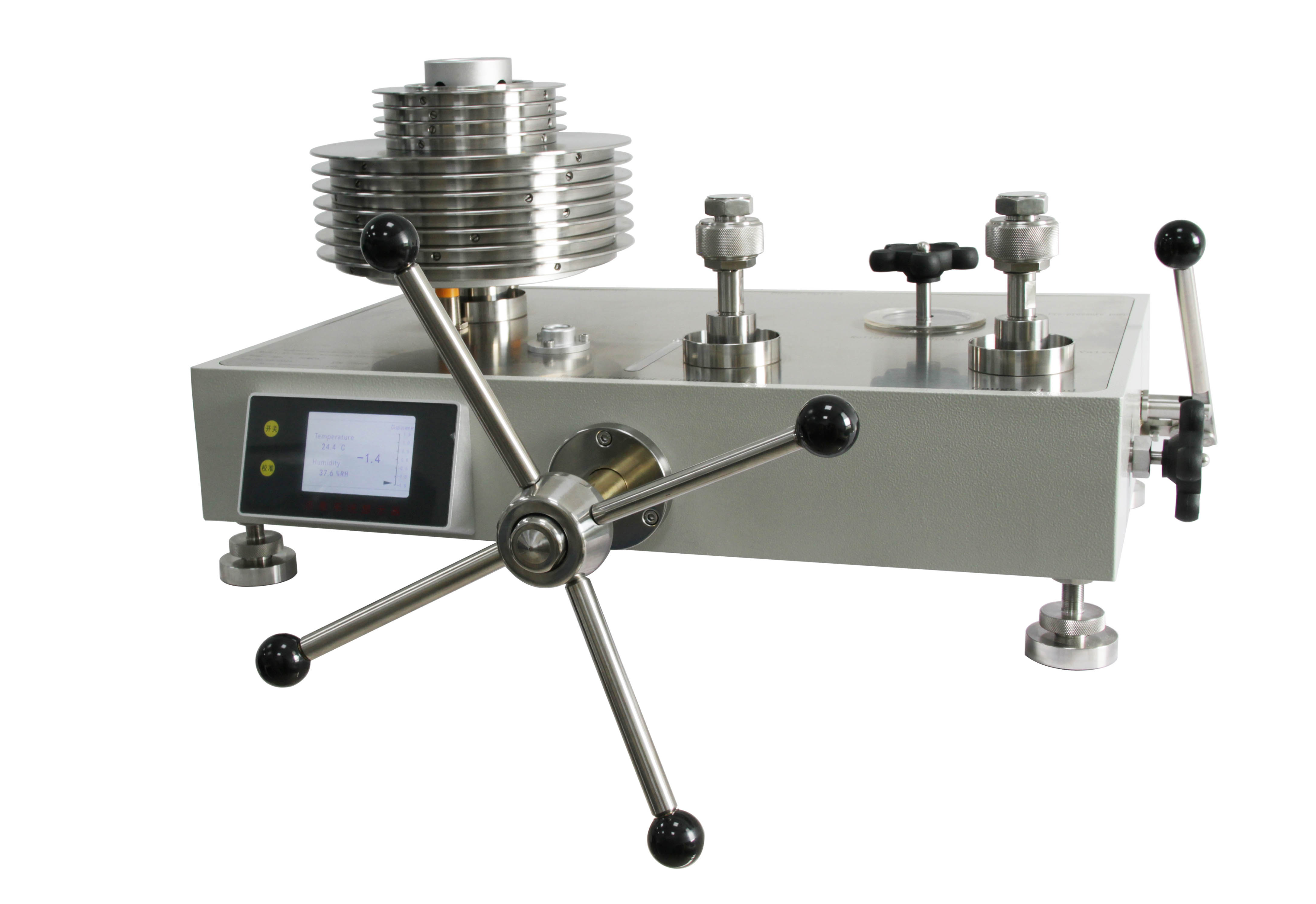
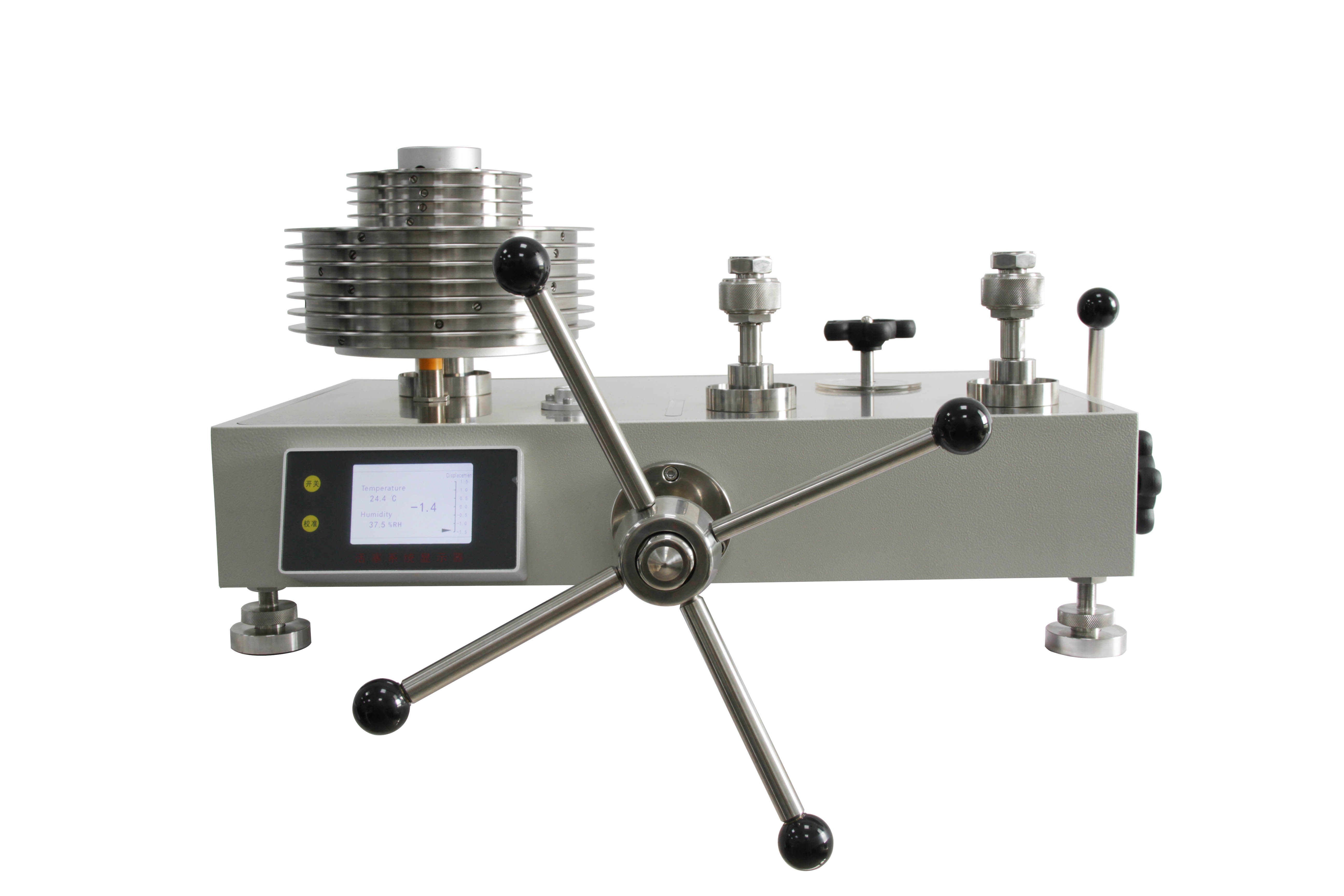
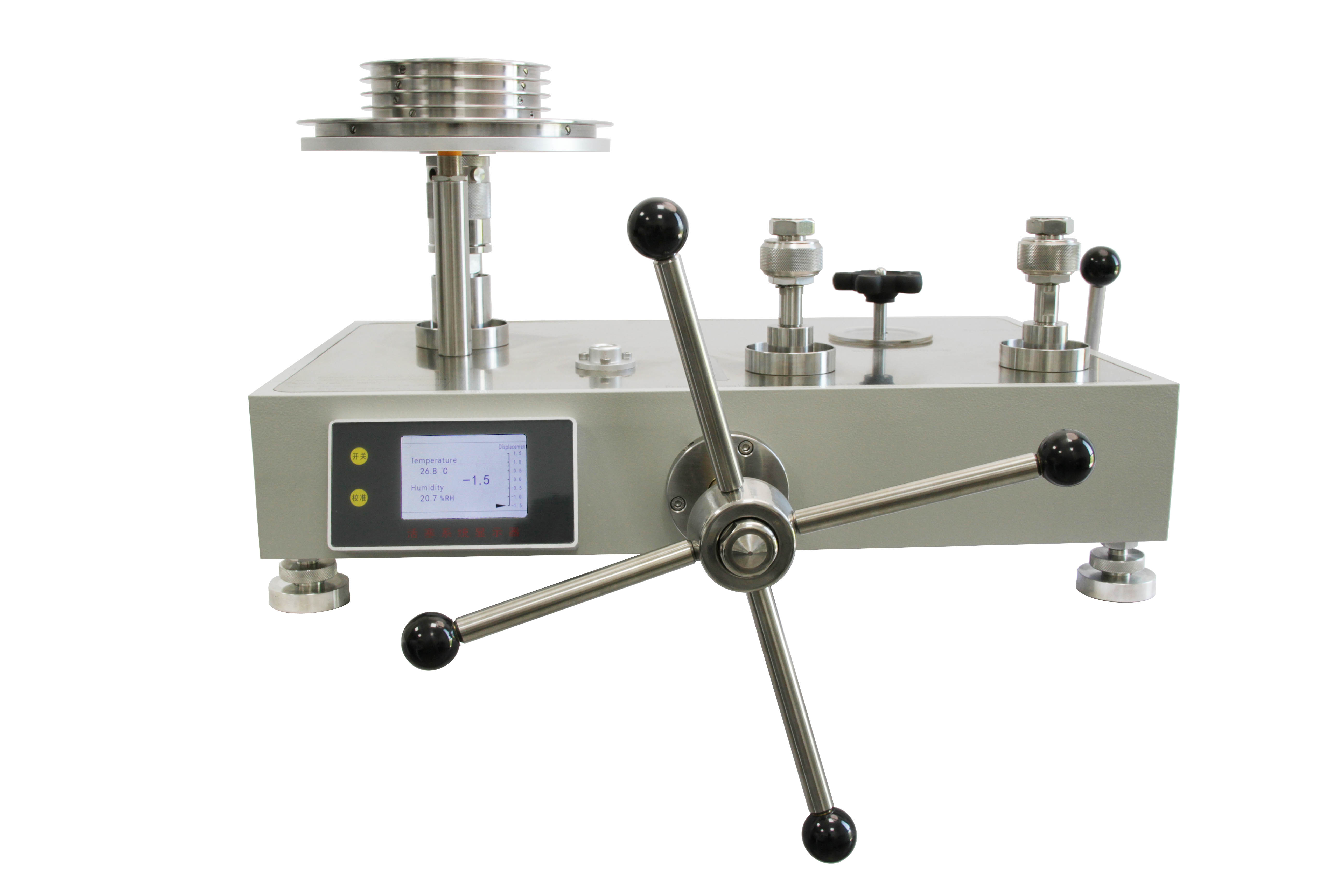
BL511 Hydraulic Deadweight Tester (160MPa)
The model BL511 hydraulic deadweight testers are applicable in very wide variety of pressure calibration and measurement tasks. The piston cylinder assembly is the heart of the dead weight tester and responsible for its high accuracy. We manufactures piston cylinder with accuracies from 0.05% of reading up to 0.01% of reading. To give an idea of the manufacturing skills, the space between the piston and the cylinder is in the um range and can only be measured in a climate room.
KEY FEATURES
0.02%, 0.01%, 0.005% accuracy
Built-in filter in 400ml oil reservoir
Shows pressure regulator rod position
3.5 inch LED shows piston position, ambient temperature and humidity
Piston moving position indicator can be easily calibrated
The piston and cylinder is made of the high intensity, extreme hardness and lowest thermal expansion tungsten carbide, which density is 15 g/cm3, thermal coefficient of expansion is 16.5 ppm /℃
Five year warranty for piston stability
APPLICATION
Primary pressure calibration in lab
Precision pressure measurement
Youtube video https://youtu.be/YRjMPBhDwQs
SPECIFICATION
Pressure range: (0.1~6)MPa... (2~160)MPa
Accuracy: 0.05%, 0.02%, 0.01%, 0.005% of reading
Piston material: Tungsten carbide, thermal Coefficient of Expansion is 16.5 ppm /℃
Piston material: Tungsten carbide
Cylinder material: Tungsten carbide
Mass set material: 304 non-magnetic stainless steel
Hydraulic base material: Aluminium alloy
Transforming and lubrication medium: Sebacate
Piston diameter: 0.16cm
Effective area: 0.02cm2
Reservoir volume: 400ml
Connector: Metric (NPT and BSP is option)
Pressure units available: MPa, bar, PSI
Base size: 360 mm (H) x 710 mm (L) x 510 mm (D)
Base weight: 30kg
PRESSURE SELECTABLE SHEET
Part # | Pressure | Piston | Mass | Accuracy (%rd) |
BL511-6MPA | (0.1~6) MPa | 0.5kg | 29.5kg | 0.05, 0.02, 0.01, 0.005 |
BL511-25MPA | (0.5~25) MPa | 0.5kg | 24.5kg | 0.05, 0.02, 0.01, 0.005 |
BL511-60MPA | (1~60) MPa | 0.5kg | 29.5kg | 0.05, 0.02, 0.01, 0.005 |
BL511-100MPA | (2~100) MPa | 0.5kg | 49.5kg | 0.05, 0.02, 0.01, 0.005 |
BL511-160MPA | (2~160) MPa | 0.5kg | 79.5kg | 0.05, 0.02, 0.01, 0.005 |
SCOPE OF DELIVERY
BL511 Hydraulic deadweight tester base
Piston cylinder unit
304 non-magnetic stainless steel mass set, density is 7.85 x10³kg/m3
Mass carrier plate
Adapter kits (1/4 NPT, 1/2 NPT, 1/4 BSP, 1/2 BSP)
User manual
Factory calibration report
Transit case
OPTIONAL ACCESSORIES AND SERVICES
Accredited Calibration, include mass set calibration (P/N: CAL-511)
Water media deadweight tester (P/N: BL511W)
Customzied range: 1MPa to 100MPa, 1MPa to 160MPa
ORDERING MODEL NUMBER
BL511-6MPA-X
BL511-25MPA-X
BL511-60MPA-X
BL511-100MPA-X
BL511-160MPA-X (X is accuracy, 005: 0.005%; 01: 0.01%; 02: 0.02%; 05: 0.05%)
(Need to inform the local gravity value in advance)
Q: What is the length of piston?
Generally, it is 50mm with exception of inserting part of piston seat.
Q: What is the temperature on the front LED of BL511 deadweight tester?
It is amibent temperature.
The front LED also show the ambient humidity.
The temperature and humidity sensor is located under the hydraulic base.
Q: How to measure the piston temperature of BL511 deadweight tester?
The temperautre in high level metrology lab is very stable, we can consider the piston temperature is same as ambient temperature.
If necessary, use a AA class PT100, contact the outside of PCU to read the temperature value.
Q: There is a small hole on the piston cylinder unit, what is it used for?
It is used to release the excess librucating oill of PCU system.
Q: What is the right transforming media for deadweight tester?
For pressure >25MPa,the sebacate is the best choice.
For pressure ≤25MPa, mineral oil as below:
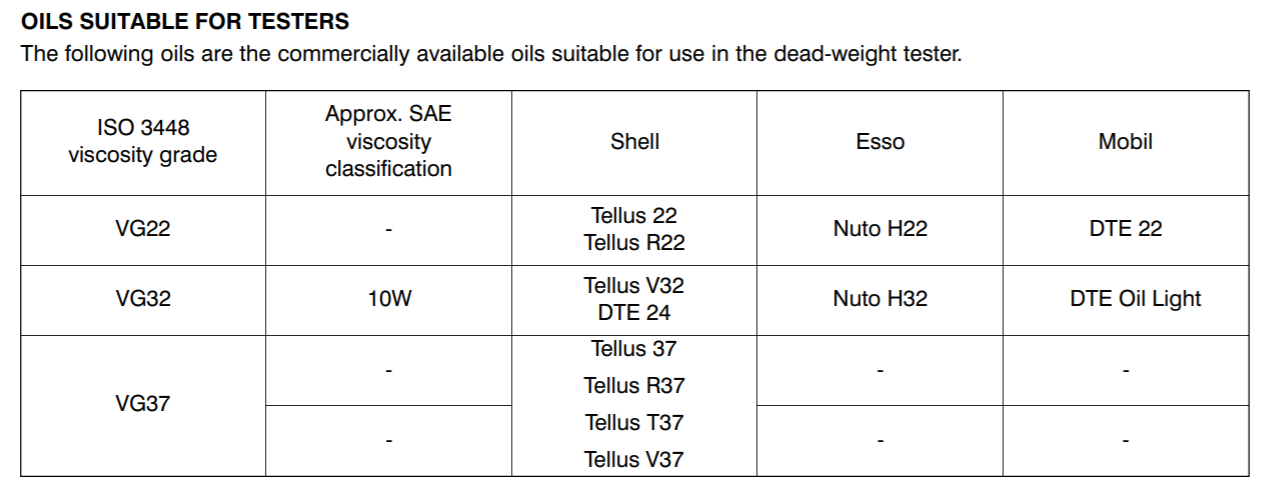
For testing piston effective area (≤25MPa), it is recommend to use the mixture of mineral oil and aviation kerosene which volume ratio is 4.29 : 1
For water media DWT, why the oil-free pressure calibration is very important?
Oil-free pressure calibration is used in laboratory because it eliminates the need for oil to lubricate internal components, which can lead to leaks and environmental impact.
It also helps organizations meet regulatory standards and uphold best practices. Components, hoses, sensors and instruments utilized in an oxygen environment pose critical safety issues for manufacturers and services providers to ensure all in service items are maintained in a particulate and hydrocarbon free state. Any liquid oxygen system or gas oxygen system requires an extremely high level of confidence in your laboratory environment, hardware selection and component handling processes way before you delve into the complex processes for component cleaning, extraction and contamination analysis. The Oxygen Clean room offers aviation, naval, defence, space and medical sectors a bespoke cleaning and instrument calibration facility for “oil free” oxygen clean systems.